Blog

Chatbot result linking to a paper

Do AI chatbots link to the publisher’s version of new research? A small test

TL;DR: When an AI chatbot is asked a fairly straightforward medical question, and a paper published in 2026 gives the most recent finding, does the chatbot use that paper and link back to the publisher-hosted version? Surprisingly, Grok gave the statistic from the 2026 paper in all 12 of its answers, while Claude gave it

Do AI chatbots link to the publisher’s version of new research? A small test Read More »
AI crawler rules

What academic publishers’ robots.txt files say about AI crawlers

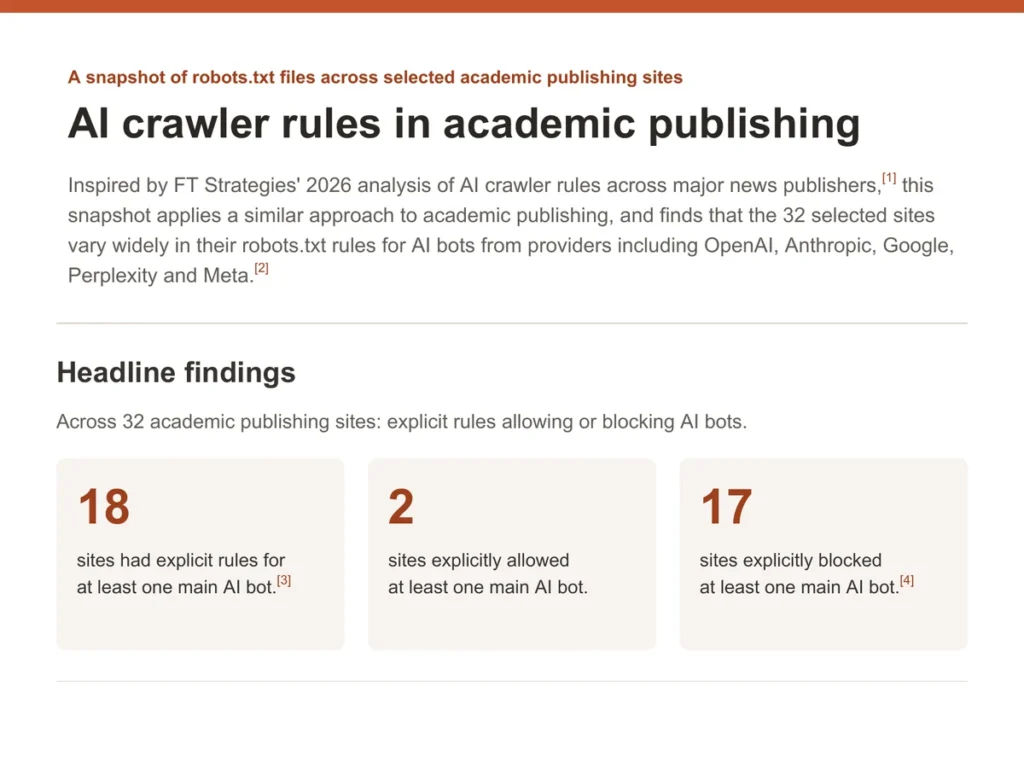
I put together this snapshot of AI crawler rules in the robots.txt files of 32 academic publishing sites after reading FT Strategies’ analysis of news publishers’ robots.txt files. Only afterwards did I realise that it has limited value, because services such as Cloudflare can block AI bots at the network level without anything appearing in

What academic publishers’ robots.txt files say about AI crawlers Read More »

Comments on a manuscript

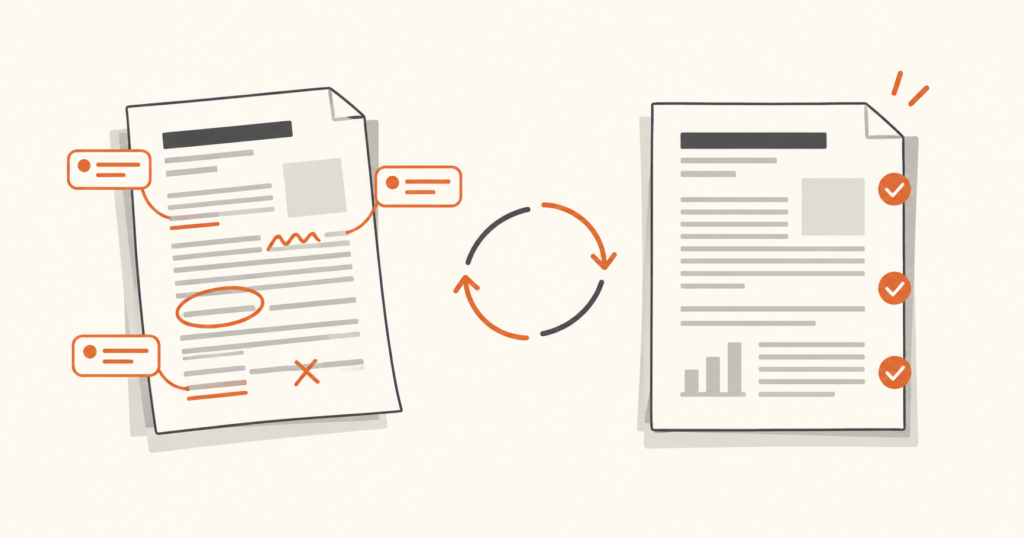
Quick comments on the new King and Worthington working paper on AI article reviews

The new King and Worthington working paper, AI Article Reviews Dominate Human Peer Reviews at Their Best: Evidence and Policy Choices, is interesting. Not so sure about Kent Anderson’s comments on it, especially where he says that peer review is “first and foremost a selection step”, given that in 2022, mega-journals, typically associated with scientifically

Quick comments on the new King and Worthington working paper on AI article reviews Read More »

Minimalist document review interface

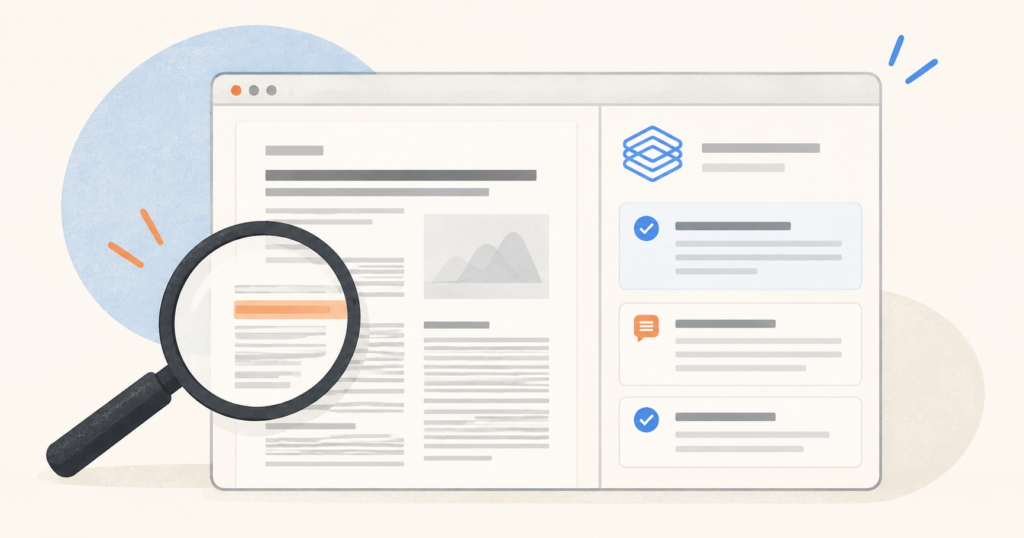
Quick test of Google’s Deep Review

Google has launched Deep Review, its AI system for reviewing and checking papers. It’s the public version of the Paper Assistant Tool described in its June preprint: Towards Automating Scientific Review with Google’s Paper Assistant Tool. The service gives you 2 free reviews per week with 4 Argon on Medium. If you are using the

Quick test of Google’s Deep Review Read More »

screenshot 2026 10 07 094559

AI verifiers are getting better and cheaper at finding errors in research papers

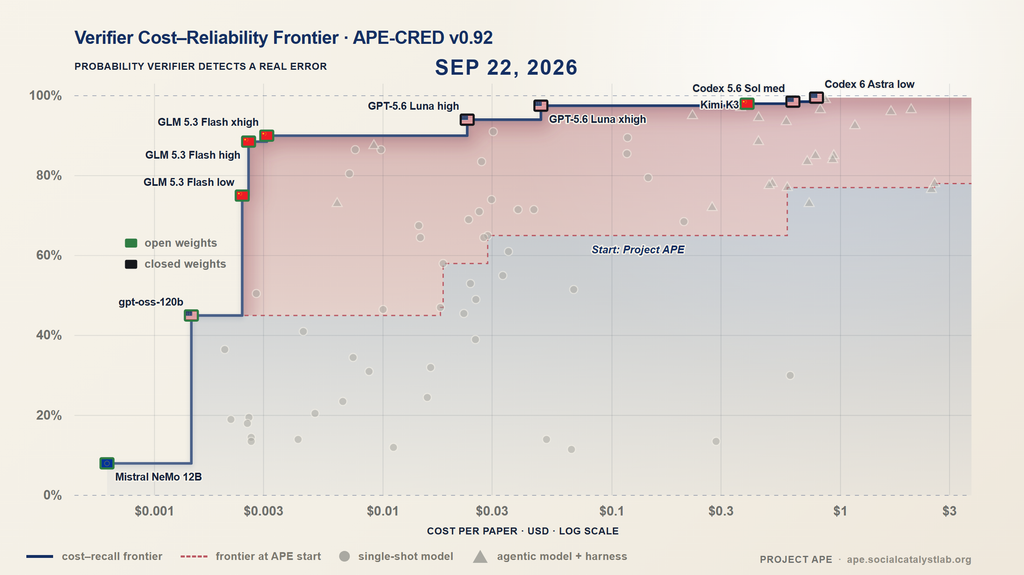
AI verifiers are getting better and cheaper at finding errors in research papers
This is a lovely visualisation from Project APE at the University of Zurich’s Social Catalyst Lab, tracking how good AI verifiers are at finding deliberately planted errors in AI-generated research papers, and how much it costs to find them. Models released over the past 18 months went from finding about 4 in 10 errors to finding almost all of them, while the cost of finding roughly three-quarters of the errors fell about 1,000×, from $2.50 per paper for an August 2025 released model to $0.0025 with the latest models.

AI verifiers are getting better and cheaper at finding errors in research papers Read More »

digital minds sprint

Notes from the Apart Digital Minds sprint and the case for a guided platform

TL;DR: I took part in Apart Research’s Digital Minds sprint in August and learnt a lot. It was my first attempt at doing this kind of work. AI tools made it surprisingly easy to set up and run [poorly designed] experiments on how models describe their own preferences and experiences, but the model’s advice about

Notes from the Apart Digital Minds sprint and the case for a guided platform Read More »

Latest issue of PubTech Radar

PubTech Radar Scan: Issue 43

🚨 New issue of PubTech Radar is out: https://substack.com/@pubtechradar/p-202950318. Contents include: 📰 News: PLOS’s move to Janeway for submissions, Google letting publishers opt out of AI Overviews, Company of Biologists’ Fast & Fair trial cutting peer review decisions from 37.7 days to 5.5. BookStories (‘openscience.works), one of seven projects on the Dutch “Renew the Book 2026”

PubTech Radar Scan: Issue 43 Read More »